
FINANCIAL WELLNESS
Financial wellness is a holistic term that encompasses your relationship with money and how it impacts your life. It is your ability to live and achieve a healthy financial life where you are not contstantly stressed about money or financially struggling. It is having a clear understanding and a sound plan for managing your money and credit and the power to take control of your financial health now and into the future. We often focus on physical, mental and emotional health when we talk ablout stability and well-being but FINANCIAL wellness is important too. Financial wellness is more than just about having money in the bank. It's about feeling confident and in control of your day to day finances, the capacity to deal with and bounce back from financial set backs and the ability and resources to get on track, and stay on track, to meet your financial goals. Whether you're paying off debt, building savings, or planning for the future and because the stress of not a healthy financial life can cause stress related and induced medical issues, financial wellness not obnly affects your day-to-day peace of mind and long-term goals but is crucial to overall well-being. By understanding and striving for financial wellness, you improve your overall wellbeing so you can have a more fulfilling life.
Therefore, the resources on this page are here to educate, motivate and empower you to achieve financial freedom you deserve and improve your personal finances by giving you the tools to refrain from overspending and encouraging you to manage, save and invest your money.

FREE PORTAL RESOURCES, EDUCATION, COURSES, CERTIFICATES & 1 on 1 FINANCIAL COACHING
n our ongoing commitment to improve the financial well-being of justice impacted and formerly incarcerated communities we serve, we have officially partnered with First Step Alliance and KOFE: Knowledge of Financial Education to bring you access to FREE portal resources and education regarding money, housing, budgeting, credit, retirement, credit counseling, certificates of completion and learning modules, as well as a dedicated toll free hot-line to financial coaches. We hope to educate, motivate and empower you to achieve financial freedom by giving you the tools to refrain from overspending and encouraging you to save and invest.
The portal requires that you create an account and verify your email address before you can log in and access the resources. Therefore, be sure to click on the link within the validation email to get started (if you do not see it in your inbox or updates, check your junk/spam folder)
Register to create an account by clicking the flyer, the button or by visiting https://firststepalliance.kofetime.com/register/. (please choose New Life Second Chance as the partner in the drop down menu)
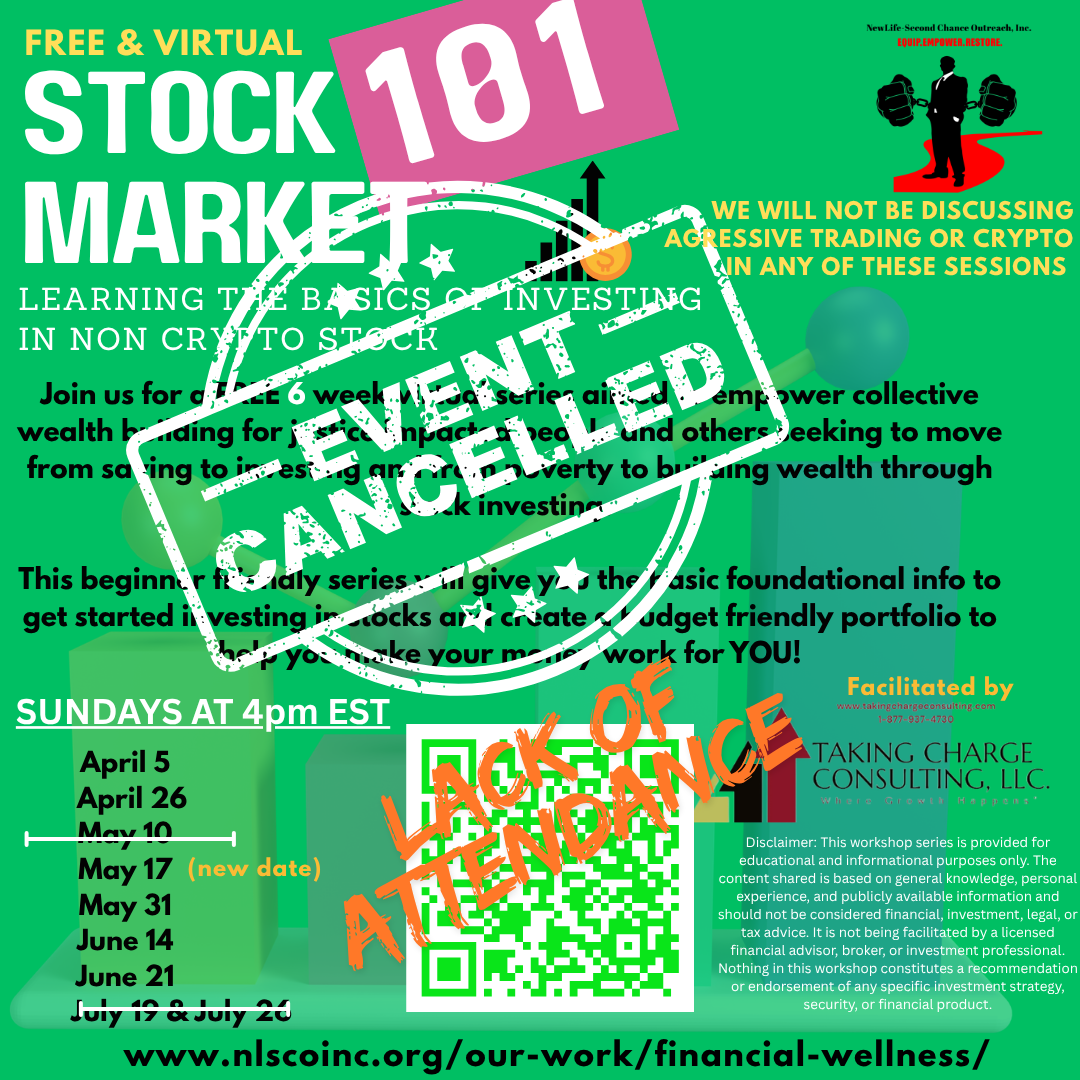
CANCELLED
Despite requests to learn more about investing and over 40 people registering, attendance was low or non existent. Therefore, we have decided to also enjoy our Sundays by cancelling the remainder of the sessions. We thank those who did attend to learn more about stock investing and congratulate those who have seen profit from the investments made. We wish you all the best on your investing journeys.

Achieving financial wellness is a unique journey that is different for everyone but there are several steps that can guide you to being successful in your journey to economic and financial freedom!
1. Change Your Money Mindset
2. Budget
3. Open a Savings Account
4. Create an “emergencies only” Fund
5. Get Insurance
6. Reduce Debt
7. Seek support
8. Stay informed
9. Spend Wisely
10. Take Advantage of Free Financial Education Workshops & Financial Tracking Apps
1. Change the Way You Think About Money- Sometimes our attitude and belief about money can significantly impact our financial behavior. Reflect on how your upbringing and experiences have shaped your financial mindset, and consider whether these beliefs are helping or hindering your financial wellness.
2. Create A Budget- In order to make informed financial decisions and avoid overspending, you need to know what you are spending (or wasting) yoru money on. After you create a budget and eliminate spending where it isn't needed, stick by it.
3. Open a Savings Account- You can contribute to your long term financial security by setting aside money on a regular basis. Whether it is $5 a month or $500 a month, regularly depositing money into a savings account can help you build a financial cushion.
4. Create an “emergencies only” Fund- Aside from a savings account, create an emergency fund that is ONLY used for unexpected expenses and no, you needing a new pair of heels for Taylor Swift's concert or wanting to take a cruise is not an emergency. An emergency is something that would set you back and would affect your livelihood and are usually unexpected such as medical bills, car repairs, the death of the main provider, etc. With today's climate that targets the poor and working class with recent acts of SNAP & Medicaid cuts and the impending cut to section 8, public housing and even more, there is no time like the present to start an emergency fund that could cover three to six months of living expenses.
5. Get Insurance (life, health, renter's and homeowners)-. In the event of a significant financial loss, having insurance coverage can save you from financial distress if unforeseen events occur. FYI: GoFundMe is not life insurance!
6. Reduce Debt- High levels of debt can be a major obstacle to your financial wellness. Pay off high-interest debts first and avoid taking on unnecessary new debts. Consider strategies like debt consolidation or refinancing for more manageable repayment terms. TIP: Avoid using credit whenever you can.
7. Seek support- Money matters can be complex and managing it can be hard but there are a plethera of resources, many that are free and online, that can provide valuable professional advice and guidance tailored to your specific financial situation.
8. Stay informed- Stay updated with financial news and trends that can help you make better financial decisions. Educate yourself on topics like interest rates, market trends, and new financial tools and products. Also, stay informed on your credit score by taking advantage of a free annual credit report.
9. Practice mindful spending- You don't need to buy everything you see and certainly if you can't afford it or have to use credit to get it. Be conscious of your spending habits. Ask yourself if each purchase aligns with your financial goals and values. and if it is a need or a want and again, the newest iPhone is not a need when the phone you currently have works just fine!
10. Take Advantage of Free Financial Education Workshops & Financial Tracking Apps- Almost every community resource agency offers, or can refer you to, free financial literacy workshops focused on personal finance topics like managing credit card debt, banking, budgeting, etc. Use apps, often free, that monitor cash flow, track expenses, and suggest cost-saving opportunities.