Humanizing Language
WE ARE PEOPLE!
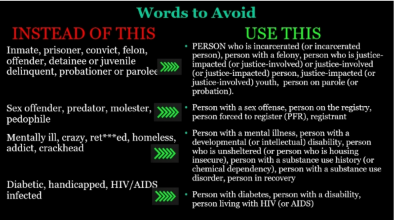
Today, there are approximately two million people incarcerated in the United States’ jail and prison system. People with criminal justice histories are referred to in an array of dehumanizing labels, such as “inmates,” “criminals,” “prisoners,” “convicts,” “delinquents,” “felons,” and “offenders.” Even after people have served their time, once they have returned to the community, these labels follow that not only cause stigmas but impact laws and policies that affect them based on social stigmas. Terms like “inmate or ex-inmate,” “prisoner or ex-prisoner,” “convict or ex-convict,” “felon or ex-felon,” and “offender or ex-offender” are used to categorize and stigmatize people affected by the criminal justice system based on their past actions or what they have been accused or convicted of but may not even have been guilty of.
Dehumanizing labels stereotype and marginalize people based on a time or circumstance in their life rather than support them as the people they currently are as they attempt to rebuild their lives. Individuals with justice system involvement are not defined by their conviction history. The words we use to reference people should reflect their full identities, abilities and acknowledge their potential and capacity to change and grow.
Be mindful of how you speak about people impacted by the criminal legal system, social systems, the people we serve and whom you will interact with and our staff and board members (in which a few are justice-involved). We encourage you to use humanizing language going forth as your example will inspire others to see justice-involved people as PEOPLE, not just their criminal record.
DIGNITY!
Because people are human and should be treated as such, dignity, care, humanity and respect are due to all. When we use language that strips the humanity from people, we no longer see them as people, but they are!
IMPACT!
Laws are made for "criminals". Therefore, when people are addressed as and treated as PEOPLE first who are mothers, fathers, sons, daughters, doctors, etc., policies and laws will reflect the care required to hold PEOPLE accountable in a humane and dignified way.
POWER!
Words have power! From the time we could understand languge, we learned that there are power in the words and the names that we call people.
COMMUNITY!
When people are treated as people, they behave as people and when communities have healthy, whole, employed, stable and civically engaged PEOPLE, communities are safer and more productive.